



You water it, feed it and fuss over it, and in return you get one more glossy leaf. A stubborn orchid is rarely an unhappy orchid — it is usually a comfortable one. Orchids flower when something shifts: light strengthens, nights turn cooler, roots dry out between drinks. Give yours those signals and most moth orchids will push up a new spike within a season. Here are the seven reasons yours has gone quiet, and how to fix each one.
1. It Is Not Getting Enough Light
This is the single most common cause of a flowerless orchid. A windowsill a metre back from the glass, or a north-facing one, delivers a fraction of the light these plants want. Phalaenopsis are often described as low-light plants, which is true only in the sense that they dislike direct midday sun.
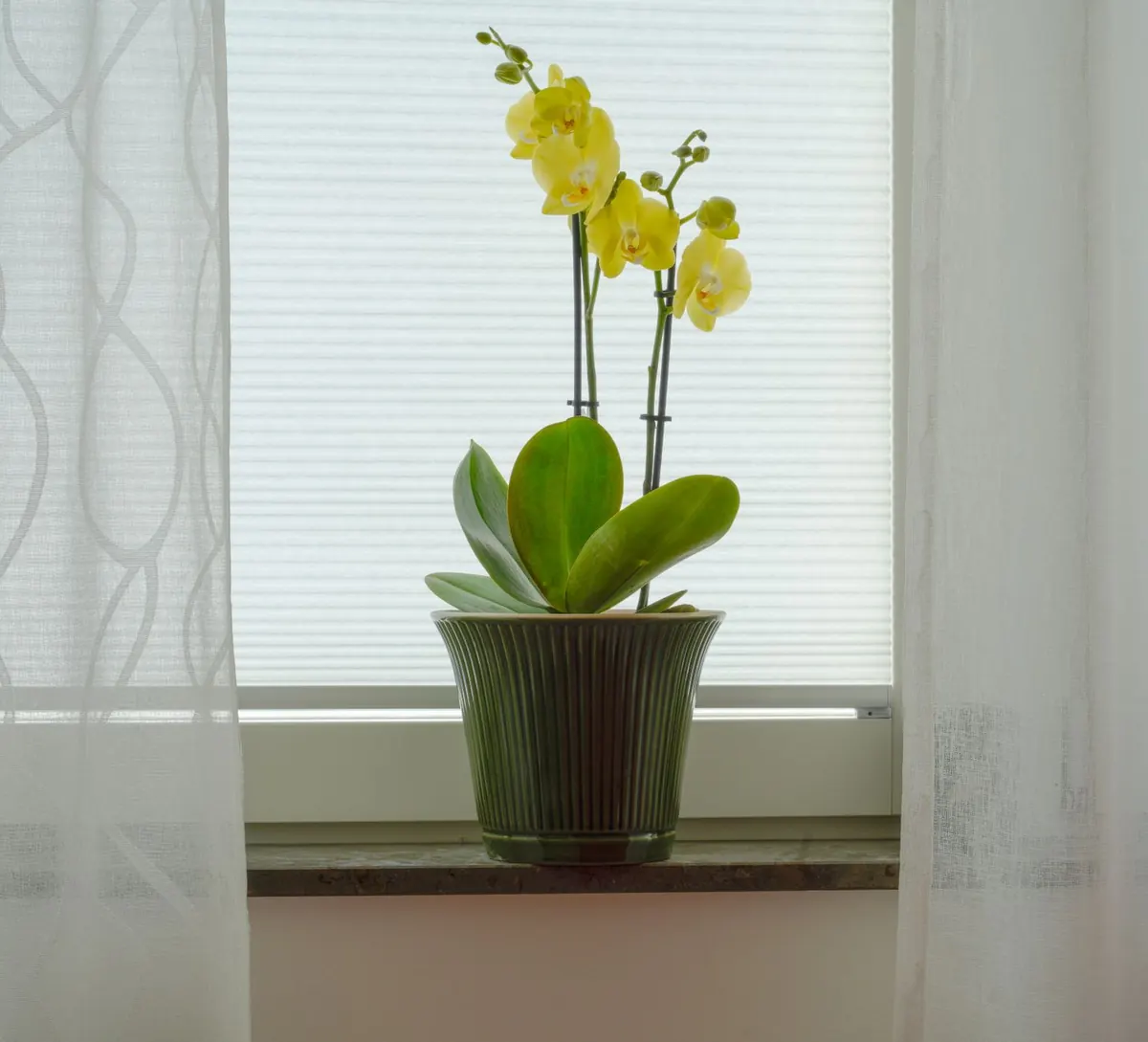
An east-facing window is close to ideal. A south or west window works if you filter the strongest sun with a voile curtain or a blind. Look at the leaves for clues: deep dark green, long and floppy growth means too little light. Firm mid-green leaves with a faint reddish blush on newer growth means the balance is about right. Move the plant closer to the glass gradually over two or three weeks rather than all at once, and turn it a quarter turn each week so it grows evenly.
2. The Nights Are Too Warm
Phalaenopsis set flower spikes in response to a drop in night temperature — roughly 5°C below daytime levels, held for two to four weeks. Modern homes with central heating and double glazing rarely offer that, especially in the room where you spend your evenings.
The fix is simple. In early autumn, move the orchid to a cooler spare bedroom or landing for three or four weeks, with nights around 13–15°C and days a few degrees warmer. Keep it away from radiators and from cold draughts. Once a spike appears, bring it back into normal room temperatures. Other types have similar needs: Dendrobium and Cymbidium usually want a cooler, drier winter rest, and a warm room all year will keep them leafy and barren.
3. Watering Is Out of Step With the Roots
Orchids are not houseplants that live in soil. They grow on tree bark in the wild, and their roots need air as much as water. Watering on a fixed weekly schedule is the fastest way to lose a good plant.
Instead, watch the roots through a clear inner pot. When they turn silvery grey, the plant is ready. When they are green, it is not. In practice this is usually every seven to ten days in summer and every two weeks or more in winter. Take the inner pot to the sink, run tepid water through it until it flows freely from the bottom, let it drain completely, then put it back. Never leave it standing in water inside a decorative pot.
- Overwatered: roots brown, soft or hollow, a sour smell from the compost, yellow lower leaves that drop off.
- Underwatered: roots pale and papery, leaves thin and limp, with pleats along the centre.
- About right: thick silvery-green roots with bright green tips, and leaves that feel firm and cool.
4. Feeding Is Either Too Weak or Too Strong
Orchids are light feeders, and a common mistake is treating them like tomatoes. Full-strength fertiliser burns the fine roots and pushes soft, sappy leaf growth at the expense of flowers.
Use a balanced orchid fertiliser at quarter to half the strength on the label, applied every second watering from spring through early autumn. A plant that has sat in the same compost for a year without feeding is probably simply hungry; a plant that has been dosed weekly all winter needs a rest. Once a month, water with plain tepid water and let it run through to flush out the salts that accumulate in the compost.
5. The Compost Has Broken Down
Orchid bark does not last forever. After eighteen months to two years it crumbles into a soggy mass that holds water against the roots and squeezes out the air they need. If the surface of the compost looks like dark tea leaves rather than distinct chunks of bark, repotting is overdue.
A healthy orchid grows roots first, leaves second and flowers third. If the roots are not happy, nothing above the compost will be.
Repot after flowering, not during. Use fresh orchid bark one pot size up, trim any roots that are brown and mushy with clean scissors, and keep the crown sitting level with the surface rather than buried. A slightly snug pot is fine — an orchid with lots of spare room will spend its energy on root growth instead of flowers.
6. Pests Are Draining It
Small infestations are easy to miss and quietly cost a plant the energy it would use for flowering. Mealybugs look like little white flecks of cotton wool in leaf joints and under leaves. Scale appears as brown bumps along stems. Thrips and red spider mites cause silvery stippling and distorted buds, and often thrive in dry, warm rooms.
Wipe what you can see with a damp cloth or a cotton bud dipped in diluted washing-up liquid, then check the plant weekly. Repeat treatment matters more than strength, because eggs hatch in waves.
7. Shock, Bad Timing and Cut Spikes
A green flower spike is an asset. If you cut it back to the base after the last bloom fades, you lose the chance of a second flush from the nodes further down. Cut just above a node only if the spike has started to turn brown and dry.
Repotting in full growth, moving the plant from room to room, or letting it sit in a cold draught can all knock it back by a season. Orchids also need to reach a certain size: a young Phalaenopsis with fewer than three or four pairs of mature leaves simply is not ready. Give it another year of good light and steady feeding.
Getting an Orchid to Flower Again: a Simple Routine
- Place it in the brightest spot you have that avoids harsh midday sun.
- Water only when the roots turn silvery, and let the pot drain fully.
- Feed weakly and often from spring to early autumn, and flush the compost monthly.
- Give it a three-week spell of cooler nights in early autumn.
- Do not cut a green spike, and do not repot unless the bark has collapsed.
- Be patient — new spikes often appear six to eight weeks after the cool spell, with buds opening weeks later.
If your orchid still refuses to flower after a full year of this, tip it out of its pot and look at the roots before changing anything else. Firm roots with green tips mean the plant is healthy and the growing conditions need adjusting. Soft, dark roots mean the problem was never the flowers at all.
Photo: Damir K / Pexels
Related posts
More stories you’ll love reading