



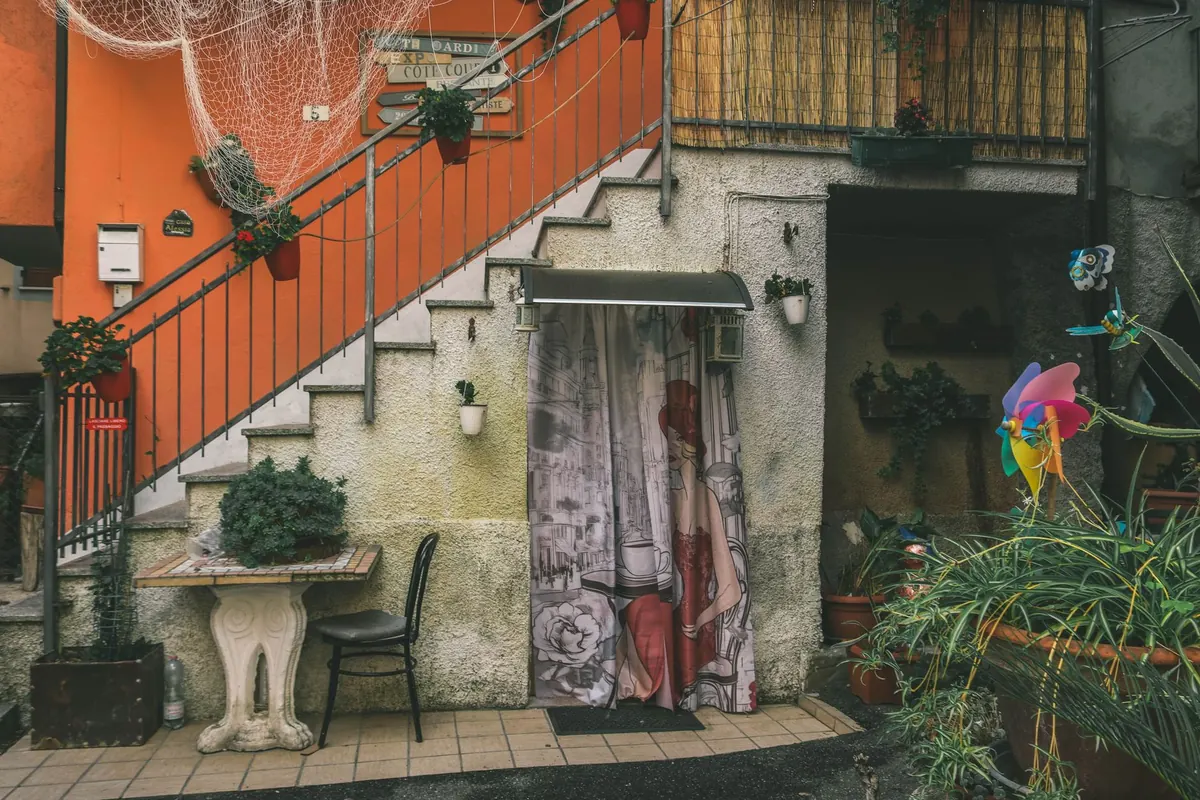
A courtyard is often the space nobody quite knows what to do with: a strip of paving, walls on three sides, a drain in one corner. It can also become the most rewarding garden you own. You see every plant from the kitchen window, so mistakes are obvious — and so is every well-placed bulb or leaf that catches the evening light. The aim is not to cram in as much as possible. It is to build a simple framework that still looks deliberate in February.
Read the space before you buy anything
Courtyards are microclimates. A south-facing wall will bake in summer and hold its warmth into the evening, while the corner behind it may sit in frost until March. Watch yours for a week before spending anything on plants.
- Light: note where sun actually lands, and for how long. Morning sun and afternoon sun suit quite different plants.
- Heat: paving and brick store warmth, so a sheltered courtyard can run a zone or two warmer than the open garden beyond it.
- Wind: narrow gaps between buildings funnel gusts. A climber on wires copes far better than a tall, loose shrub.
- Water: see where puddles linger after rain. That corner wants plants that tolerate damp, or a pot raised on feet.
- Boundaries: decide what to hide and what to keep. A plain fence painted a muted sage, stone or deep green will settle the whole space.
Compact plants that earn their place
In a small space, every plant has to justify its patch. The best give more than one season of interest — flowers with scent, leaves with autumn colour, berries after the blossom has gone. Start with evergreen structure, because that is what holds a courtyard together in winter, then add the seasonal extras.
- Evergreen bones: sarcococca for scented winter flowers in shade, skimmia, small hebes, shield ferns, and Japanese holly (Ilex crenata) if you want something to clip neatly.
- Long-flowering perennials: hardy geraniums, heucheras for foliage colour, epimediums for dry shade under a wall.
- Bulbs for early interest: snowdrops, crocus, dwarf narcissi and cyclamen, planted in layers in the same pot.
- One or two stars: a small Japanese maple in a large container, or a cornus grown for its coloured winter stems.
Resist collecting one of everything. Two or three plants repeated around the space look far more considered than a dozen singletons, and repetition is what makes a tiny garden read as larger than it is.
Containers do the heavy lifting
If the space is all paving, pots are your borders. Buy fewer and bigger: a 40–50cm container holds moisture and roots far better than a row of small ones, and it carries more visual weight.
- Sort out drainage first. Raise pots on feet so surplus water escapes; standing water in winter kills more container plants than cold does. Leave saucers off except in high summer.
- Use a loam-based compost such as John Innes No 2 or 3 for anything permanent. It holds water and nutrients far better than multipurpose alone.
- Plant with the rootball at the same level it sat in its old pot, firm gently, then water well to settle the compost.
- Top-dress with gravel or bark each spring, scrape off and replace the top few centimetres of compost, and feed from March to September.
Group pots in odd numbers and vary the heights — a low bowl, a tall square, a small pot lifted on a plinth. Terracotta and pale glazes bounce light around a shaded courtyard.
Use the walls, not just the floor
Vertical space is the most wasted asset in a courtyard. Fix trellis or galvanised wires to the wall and grow upwards, keeping the paving clear for seating. For an evergreen screen, Trachelospermum jasminoides gives glossy leaves and scent on a sheltered sunny wall; common jasmine and ivy are more forgiving. Clematis earns its keep over a long season, and a pyracantha or chaenomeles trained flat against a wall supplies spring flowers, autumn berries and nesting cover.
Then add the small things: a shelf of herbs or alpines at eye level, a wall planter or two, and a mirror to throw light into a dim corner. A single outdoor socket and a couple of low-voltage uplights will let you enjoy the garden after dark, when a courtyard is often at its best.
A planting plan that covers four seasons
Think in layers rather than a single summer display. Aim for something in flower or looking good in each quarter of the year, and accept that some plants will have a quiet spell.
- Spring: bulbs in pots, hellebores, blossom from a wall-trained fruit tree.
- Summer: scented jasmine, salvias and agapanthus in containers, hardy geraniums, heuchera foliage.
- Autumn: cyclamen, pyracantha berries, asters, and a maple turning colour.
- Winter: evergreen leaves, sarcococca and winter honeysuckle scent, snowdrops, coloured cornus stems.
Keeping it manageable
Small gardens fail when they are overplanted, so leave roughly a third of the paving visible and allow room for everything to grow into its space. Watering is the main summer job: containers dry out quickly, so check by pushing a finger into the compost or lifting the pot to judge its weight. In very hot spells, one thorough soak is better than three light sprinklings.
Repot permanent containers every two or three years, in early spring, moving them up one size or root-pruning and refreshing the compost. Cut back climbers after flowering to keep them tidy and away from windows and gutters. And be prepared to move things on: if a plant has sulked for two seasons in the same spot, it is telling you something. Swap it for one that suits the light, and the courtyard will settle into looking after itself.
Photo: Lorenza Magnaghi / Pexels
Related posts
More stories you’ll love reading