


Tomatoes are the reason a lot of people want a greenhouse in the first place. Under glass you get warmth from early spring, shelter from wind and rain, and a ripening season that stretches well into autumn — conditions outdoor plants in most of the UK rarely manage. The catch is that a greenhouse is a closed system. Heat builds fast, humidity lingers, and compost dries out more quickly than you expect. Get the timing right and the plants will do the rest.
Sowing and Early Growth: February to March
Sow too early and you will be nursing tall, pale seedlings through a cold March. Sow too late and the first trusses will not ripen before the light fades in September. Late February under heat, or early to mid-March in a frost-free greenhouse, is the sweet spot for most of the country.
Fill modules with fresh seed compost, firm it gently, and sow seeds about 1cm deep. A light covering of vermiculite keeps the surface open and holds moisture. Germination needs roughly 18–21°C, so a heated propagator or a warm windowsill indoors is ideal. Seedlings usually appear within a week to a fortnight.
The moment the first seedlings show, move them somewhere bright and slightly cooler — around 15–18°C. Warmth without light is what produces those spindly, floppy plants that never quite recover. Water from below rather than overhead, and prick out into 9cm pots once the first true leaves appear.
Varieties worth growing under glass
- ‘Gardener’s Delight’ — a reliable, sweet cherry type that crops generously.
- ‘Sungold’ — exceptionally sweet orange cherries, though the thin skins split if watering is erratic.
- ‘Alicante’ or ‘Shirley’ — dependable medium slicers for sandwiches and sauces.
- ‘Crimson Crush’ or ‘Mountain Magic’ — useful blight-resistant options if you also grow outdoors.
- ‘Tumbling Tom’ — a bush variety that trails happily from a high shelf or hanging basket.
Planting Out: April to May
Wait until night temperatures hold above about 10°C. In an unheated greenhouse that usually means late April in the south and mid to late May further north. Cold soil stalls roots for weeks, so if you are impatient, warm the border first with a sheet of black polythene.
Whether you use a border, large pots or growbags, work in plenty of well-rotted compost and a handful of general-purpose fertiliser per plant. Plant deeper than the pot level — bury the stem up to the first set of leaves. Tomatoes root along buried stems, which gives you a sturdier plant and a better buffer against irregular watering.
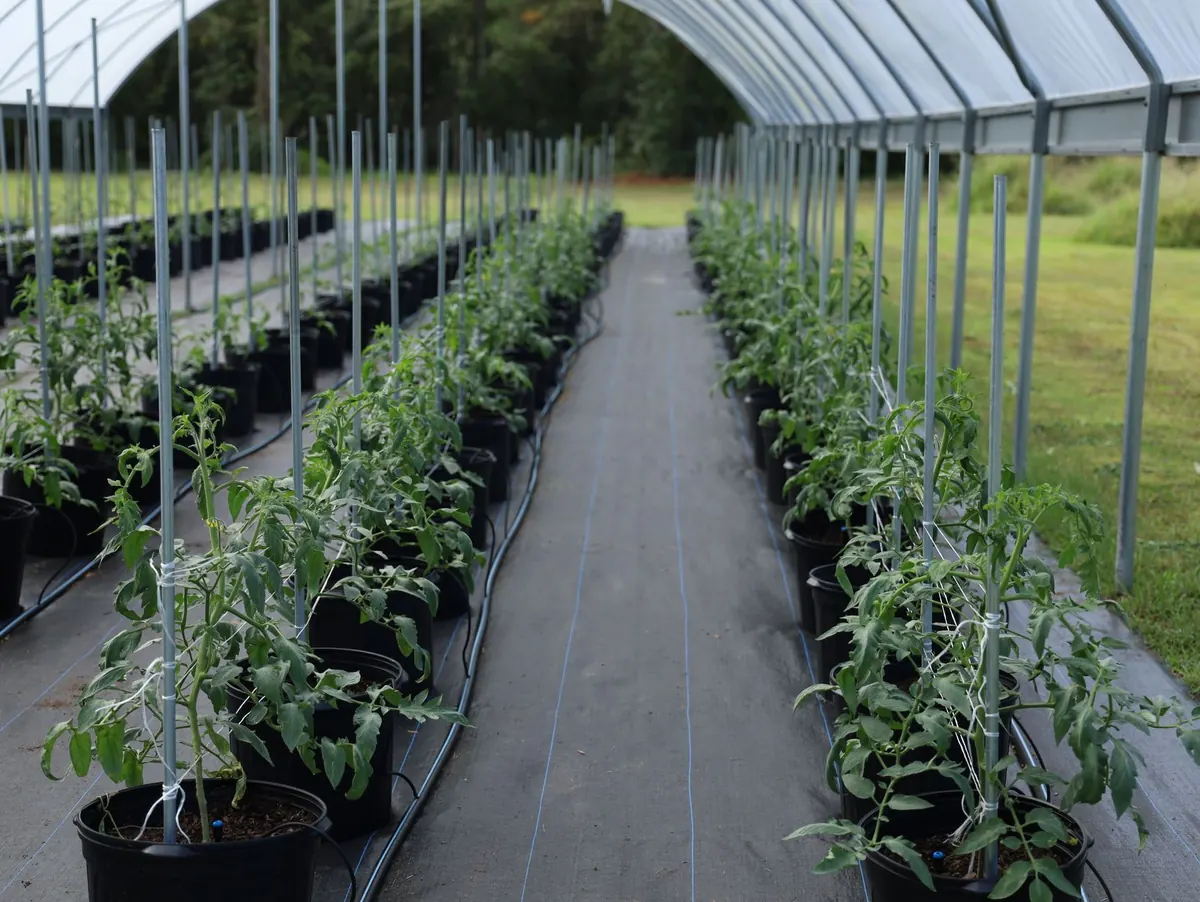
Space cordon varieties about 45–60cm apart. Put the support in at planting time rather than later, when you risk spearing the rootball: a cane, a stout string from a roof wire, or a spiral support all work well. Water in thoroughly and keep the plants just moist for the first fortnight while they settle.
Watering, Feeding and Ventilation: June to July
Consistency matters more than quantity. Little and often, ideally in the morning, with water at greenhouse temperature rather than straight from a cold tap. Letting plants dry out and then flooding them is the classic route to split fruit and blossom end rot. Growbags are the worst offenders — they hold very little compost — so consider standing plants in bottomless pots or ring culture, or fitting a simple drip system.
Start feeding once the first truss has set fruit, not before. A high-potash tomato feed once a week is plenty in June; by late July, when several trusses are swelling, move to every three or four days. Never feed a dry plant — water first, then feed.
Ventilation does as much for your crop as anything else. Open vents and doors once the temperature climbs past about 25°C, and close them mid-afternoon so the greenhouse holds some warmth into the evening. On very hot days, damp down the path to raise humidity and cool the air. In strong midsummer sun, shade paint or a netted screen prevents scorched leaves and pale, sun-scalded fruit.
Pinching Out, Tying In and Pollination: July to August
Cordon, or indeterminate, varieties grow on a single stem and will happily produce side shoots in every leaf joint. Snap those out while they are small — a couple of centimetres — and check plants weekly. Bush varieties need no pinching; just let them branch.
Feed the main stem up its support, twisting string or tying loosely with soft twine. As lower trusses ripen, remove the leaves beneath them, a couple at a time rather than all at once. It improves airflow, lets light onto the fruit and makes picking easier.
Pollination is easy to overlook under glass, where there is little breeze and few insects. Tap the canes or flick each open truss sharply at midday, when the pollen is dry and mobile. A soft artist’s brush works too.
Around late August or early September, pinch out the growing tip two leaves above the top truss. Any flowers above that point will not have time to ripen, and stopping the plant pushes energy into the fruit already set.
Harvesting and End-of-Season Jobs: September to October
Pick fruit when it is fully coloured and gives slightly under gentle pressure. A ripe greenhouse tomato smells like a tomato, which is a better test than colour alone. Leave them on the plant as long as you can for flavour — the fridge dulls it, so store at room temperature if you are not eating them straight away.
As nights cool, keep the greenhouse closed earlier in the afternoon to trap warmth, and strip off any remaining foliage that is shading fruit. If frost threatens with fruit still green, lift the plants whole and hang them upside down in a cool shed, or lay the tomatoes in a single layer in a drawer with a ripe banana or apple. Most will colour within a fortnight.
Finally, clear the greenhouse properly. Pull the plants, bag up debris, and wash down glass, staging and frames with a garden disinfectant. Overwintering whitefly, red spider mite and disease spores are far easier to deal with now than in April.
The Season at a Glance
- February–March: sow under heat, prick out, keep seedlings bright and cool.
- April–May: plant into borders, pots or growbags once nights stay above 10°C.
- June–July: water little and often, begin feeding at fruit set, ventilate and shade.
- July–August: pinch out side shoots, tie in, tap trusses to pollinate.
- Late August: stop the growing tip two leaves above the top truss.
- September–October: harvest, ripen the last green fruit indoors, then clean the greenhouse.
Keep a note of sowing dates and which varieties did well. Two seasons of that and you will have a routine tailored to your own greenhouse, which is worth more than any general advice.
Photo: Joice Rivas / Pexels
Related posts
More stories you’ll love reading