

A Beginner's Guide to Pruning Shrubs: When, What and How to Cut
Pruning a shrub can feel like a test you did not study for. The shrub looks fine—maybe a little wild, maybe a little lopsided—and suddenly you are standing there with shears, wondering whether one wrong snip will ruin it forever. Here is the reassuring truth: most shrubs are tougher than they look. They evolved to be nibbled by deer, broken by storms, and crowded by neighboring plants. With a few basic rules, you can prune with confidence instead of guesswork.
This guide covers the essentials: why pruning matters, when to prune different types of shrubs, what to remove first, and how to make clean cuts that help your plant instead of hurting it. You do not need to be a professional landscaper. You just need a sharp pair of pruners, a little patience, and a willingness to step back and look before you cut.
Why Pruning Matters More Than You Think
Pruning is not about making a shrub look tiny or tidy for its own sake. It is a conversation with the plant. A good pruning cut redirects energy, improves airflow, and helps the shrub produce stronger growth and better flowers. A bad pruning cut—or the wrong timing—can remove flower buds, invite disease, or turn a naturally graceful shrub into a stubby green blob.
- Health: Removing dead, diseased, or damaged wood stops problems from spreading and lets air and light reach the center of the shrub.
- Shape: Selective cuts keep a shrub balanced without forcing it into an unnatural shape.
- Flowers and fruit: Proper timing and thinning encourage more blooms and larger fruit on many species.
- Size control: Regular, light pruning is far better than one drastic chop after a shrub has swallowed a walkway.
- Safety: Removing weak or low branches keeps paths clear and prevents storm damage.
That said, pruning is a stress. A light trim is like a haircut; a severe chop is surgery. The goal is to work with the shrub’s natural growth habit, not against it.
When to Prune: The Golden Rule of Timing
The single most important question is not “How do I cut?” but “When?” Prune at the wrong time and you may remove the very flower buds you were waiting to see. The simplest rule is this: prune flowering shrubs right after they bloom, unless they bloom on new wood. If that sounds confusing, the sections below break it down.
Shrubs That Bloom on Old Wood
These shrubs form their flower buds the previous season. If you prune them in late winter or early spring, you cut off this year’s flowers. Wait until the blooms fade, then prune to shape and remove old stems. Examples include lilac, forsythia, mock orange, weigela, bigleaf hydrangea, rhododendron, and azalea.
Shrubs That Bloom on New Wood
These shrubs produce flowers on growth made during the current season. Prune them in late winter or early spring before new growth begins. This encourages fresh, flower-bearing shoots. Examples include panicle hydrangea, smooth hydrangea, butterfly bush, rose of Sharon, potentilla, and many spireas.
Evergreens and Needled Shrubs
Evergreens are a little different. Pines are best pruned by pinching or cutting the “candles” in spring. Spruce and fir usually need only light tip pruning in early summer. Broadleaf evergreens such as boxwood and holly can be pruned in late winter or early spring, or lightly after a flush of growth. Avoid late-season pruning that stimulates tender new growth right before frost.
When Not to Prune
Avoid pruning during extreme heat, drought, or when plants are stressed. Do not prune wet plants if disease is a concern, because damp tools and wounds can spread fungus. And never prune spring-blooming shrubs in late winter unless you are willing to sacrifice their flowers for that year.
What to Cut: A Simple Priority List
If you feel overwhelmed, start with the obvious. Work in this order, and stop to step back after each step.
- Dead wood: Cut anything that is brittle, hollow, or brown inside. Dead branches will never come back.
- Diseased or damaged branches: Remove spotted, cracked, or broken wood, cutting back into healthy tissue.
- Crossing or rubbing branches: These create wounds and invite disease. Remove the weaker branch.
- Suckers and water sprouts: Pull or cut vigorous shoots growing from the base or straight up through the shrub.
- Old, unproductive stems: On multi-stem shrubs, remove the oldest, thickest stems at ground level to encourage renewal.
- Wayward branches: Take out branches that grow inward, downward, or far outside the natural shape.
- Cosmetic shaping: Only after the health and structure are addressed should you fine-tune the outline.
Follow the one-third rule: never remove more than one-third of healthy growth in a single year. If a shrub is severely overgrown, rejuvenate it over two or three seasons instead of cutting it to the ground all at once.
How to Cut: Technique, Angle, and Confidence
Good pruning is mostly about clean cuts and correct placement. Dull tools crush stems and leave ragged wounds; sharp tools slice cleanly so the plant can seal the cut. Always cut at the right spot, not just anywhere along the branch.
Make the Cut at the Right Place
For a branch, find the branch collar—the slight swollen ring where the branch meets the trunk. Cut just outside the collar, not flush with the trunk and not leaving a long stub. For smaller heading cuts, cut just above a bud or leaf node, angled slightly away from the bud so water runs off.
Prune with a purpose. Every cut should have a reason: remove dead wood, direct growth, improve airflow, or encourage flowers.
The Three-Cut Method for Thick Branches
If a branch is thicker than your thumb, do not cut from the top down in one go. The weight of the branch can tear bark all the way down the trunk. Use three cuts instead.
- Make an undercut a few inches from the trunk, about one-third through the branch.
- Make a top cut slightly farther out from the undercut. The branch will fall, and any bark tear will stop at the undercut.
- Remove the remaining stub with a clean cut just outside the branch collar.
Thinning vs. Heading
Thinning removes a branch back to its origin, such as the trunk or a main stem. It opens the shrub, reduces density, and looks natural. Heading cuts a branch back to a bud or node. It stimulates branching and can make growth denser. For beginners, thinning is usually safer. Too much heading creates a meatball shape and weak, twiggy growth.
Sanitize Between Plants
Clean your tools with rubbing alcohol or a disinfectant wipe, especially after cutting diseased wood. This small habit prevents the spread of fungus and bacteria from one shrub to another.
Tools You Actually Need
- Bypass pruners: For stems up to about the thickness of a pencil or slightly larger.
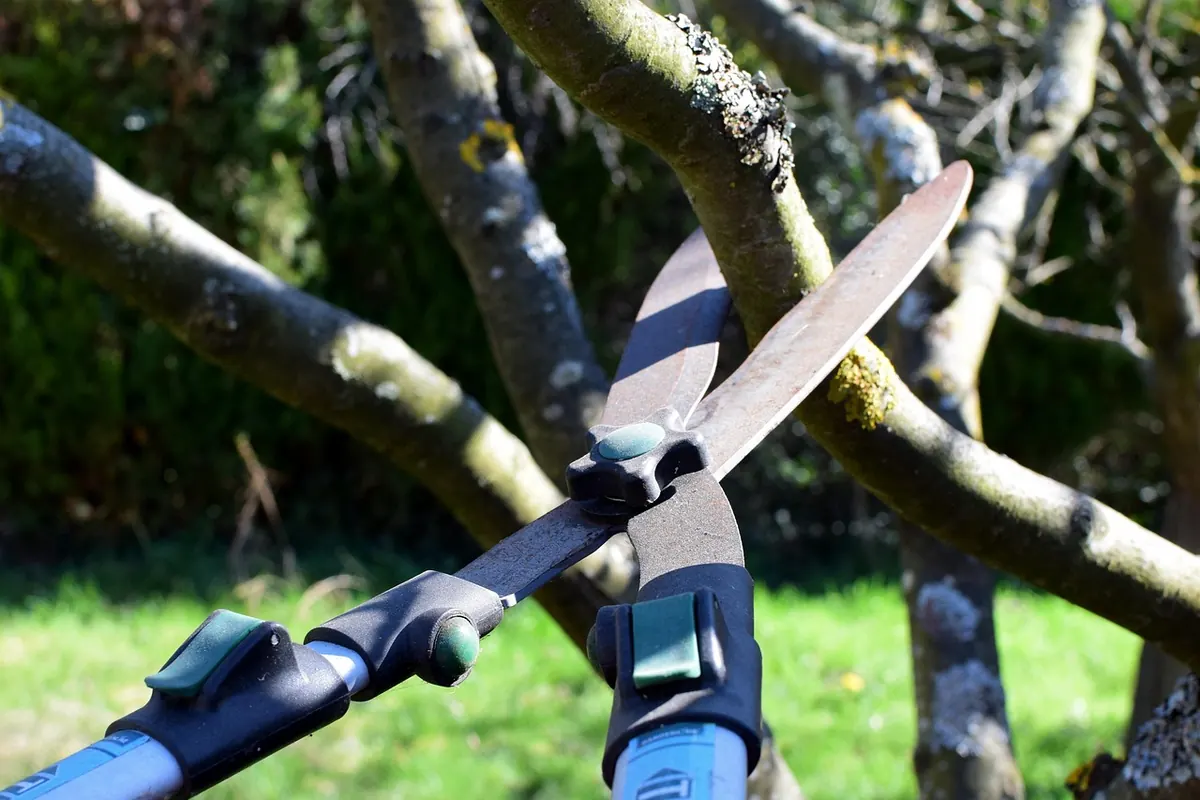
- Loppers: For thicker branches that pruners cannot handle.
- Pruning saw: For woody branches that are too large for loppers.
- Hedge shears: For formal hedges and light trimming, not for detailed structural pruning.
- Gloves and safety glasses: To protect your hands and eyes from thorns, splinters, and falling branches.
- Sharpening file and oil: To keep blades clean and sharp, which makes every cut easier and healthier.
You do not need every tool. A good pair of bypass pruners, a pair of loppers, and a pruning saw will handle most home garden shrubs.
Common Beginner Mistakes to Avoid
- Pruning at the wrong time: This is the fastest way to lose a year of flowers.
- Cutting too much: Removing more than one-third of healthy growth stresses the shrub.
- Leaving stubs or flush cuts: Both make it harder for the plant to heal.
- Shearing everything into balls: Formal shapes can be fine, but most shrubs look better with selective thinning.
- Using dull tools: Crushed stems invite pests and disease.
- Forgetting to step back: Prune a little, then look from a distance before continuing.
- Pruning wet plants: Moisture can help spread disease from branch to branch.
If you make a mistake, do not panic. Most shrubs recover. Learn from the cut, let the plant grow, and adjust next season.
A Beginner-Friendly Pruning Calendar
- Late winter or early spring: Prune summer-blooming shrubs, many evergreens, and dead or damaged wood on most plants before growth begins.
- Spring after bloom: Prune spring-blooming shrubs such as lilac, forsythia, and azalea.
- Early summer: Lightly shape evergreens and prune early summer bloomers after flowering.
- Midsummer: Remove dead, diseased, or crossing branches as needed. Deadhead spent flowers if you want a cleaner look.
- Fall: Limit pruning. Remove only broken or diseased wood, and avoid stimulating new growth before winter.
Climate matters. In warm climates, fall pruning may be fine; in cold climates, late-season cuts can die back. Watch your local weather and how your shrubs respond.
Final Thoughts: Start Small, Learn Your Shrub
Pruning is a skill built by doing. Start with one shrub, one dead branch, one clean cut. Step back. Look. Then continue. Over a few seasons, you will learn how your shrub grows, where it flowers, and how it responds to your cuts. That knowledge is worth more than any rigid rule.
Remember the beginner’s mantra: right plant, right time, right cut. With sharp tools, a clear purpose, and a little restraint, pruning stops feeling like a test you did not study for and starts feeling like one of the most useful garden skills you own.
Photo: schraubgut / Pixabay
Related posts
More stories you’ll love reading